Sir Mordred
Le Morte d'ArthurSir Mordred is the son of the Queen of Orkney and the maternal half-brother of King Arthur, a kinship concealed from Arthur when the queen first visits his court. The episodes presented here show Mordred among the Orkney brothers at court and on the road, but they also mark him as an accomplice in deception and, most consequentially, in the treacherous killing of Sir Lamorak. His story connects concealed family ties with the factional violence that corrodes Arthur’s fellowship.
Identity and Family Background
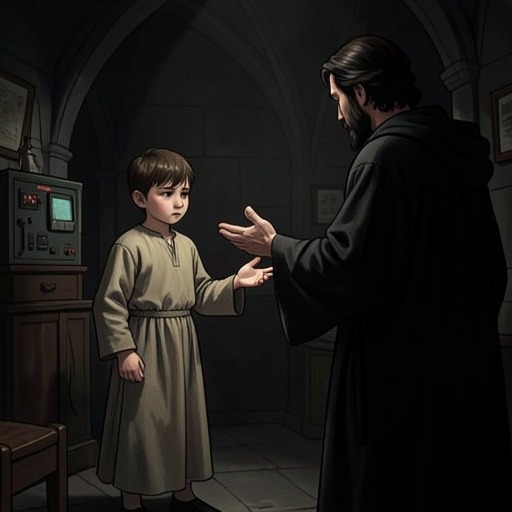
When Arthur rides to Carlion, the Queen of Orkney comes to his court with her four sons: Sir Gawaine, Sir Gaheris, Sir Agravaine, and Sir Gareth. Arthur falls in love with her, and Mordred is born; the narrative identifies the queen as Arthur’s sister through their mother, Igraine. Arthur does not know of this relationship at the time. The episode thus places Mordred within Arthur’s own family before the king recognizes the kinship, joining his birth to a concealed breach in the court’s understanding of who belongs to whom.
The family connection matters beyond ancestry. Mordred is repeatedly grouped with the Orkney brothers, especially Sir Gawaine, Sir Agravaine, and Sir Gaheris. Their common allegiance can become a force against other members of Arthur’s fellowship: later, the brothers’ private violence against Sir Lamorak makes kinship a bond of complicity rather than a guarantee of loyalty to the wider court.
Among Arthur’s Knights
Mordred appears in the company of Arthur’s knights, including on the road with Sir Uwaine, Sir Brandiles, Sir Agravaine, and another Uwaine. When they encounter Sir Dinadan and King Mark, Dinadan thinks to use the six knights to draw Mark into a joust. Mark is wary of the larger company and rides away, leaving Dinadan to rejoin the Round Table knights. The encounter establishes Mordred as part of a recognizable group of courtly knights, while Dinadan’s scheme turns their presence into a tool for misleading the Cornish king.
That deception continues through a staged challenge. Dinadan tells Mark that Sir Launcelot is among the knights and describes Launcelot’s shield, although Launcelot is not there. Sir Mordred says he is wounded and cannot properly bear his own arms, then offers his shield and harness for Sir Dagonet to wear. Dagonet rides at Mark in Mordred’s equipment, and Mark mistakes the shield for Launcelot’s and flees. The episode makes Mordred a knowing participant in a practical joke built around false identity: his arms give the deception its convincing appearance, while Dagonet’s performance supplies the threat.
Mordred’s participation in another encounter is less playful. When he and Sir Agravaine meet a wounded knight pursued by Sir Breuse Saunce Pité, both brothers promise to rescue the fugitive. Breuse then defeats Mordred and Agravaine in separate jousts. Sir Dinadan intervenes, unhorses Breuse, and identifies himself; the brothers are angered because they hate Dinadan for his connection to Sir Lamorak. The scene places Mordred among men who claim the duty of rescue, yet also shows how personal enmity—notably the brothers’ hostility toward Dinadan—shapes the company around him.
The Orkney Brothers and Sir Lamorak
The clearest account of Mordred’s most consequential deed comes through the report of Sir Lamorak’s death. At a tournament near Surluse, Sir Palamides defeats several of Arthur’s knights, including Mordred, Sir Gaheris, and Sir Agravaine. Sir Lamorak then rides out to defend Arthur’s kin and defeats Palamides. Arthur recognizes Lamorak and asks him to remain at court, promising protection from Sir Gawaine and his brothers; Lamorak answers that they have already wronged both him and Arthur. He vows to avenge the death of his beloved, Queen Morgause, but leaves for the jousts where Sir Launcelot and Sir Galahalt are present.
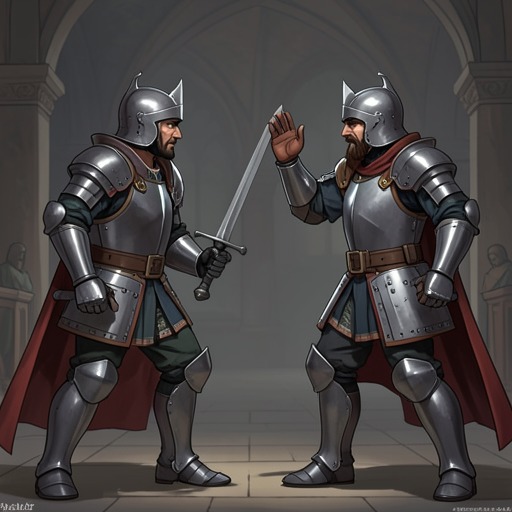
Later, Sir Tristram, Sir Gareth, and Palamides discuss Lamorak’s death. Palamides recounts that after Lamorak received the tournament’s degree, Sir Gawaine and his brothers—Sir Agravaine, Sir Gaheris, and Mordred—attacked him in a secluded place. They killed his horse and fought him on foot for more than three hours, attacking from both before and behind. Mordred dealt the fatal wound from behind. The account identifies not a fair contest but a collective ambush, and it singles out Mordred’s action within the brothers’ shared betrayal.
The aftermath exposes the fracture within the family itself. Sir Gareth, the fifth brother, says he has left his brothers’ company because he understands them to be killers of good knights; he wishes he had been present when Lamorak was slain. Sir Tristram says he would have given a great deal to have been there, and Palamides recalls that Lamorak had repeatedly overcome him in combat. Mordred’s deed therefore stands in sharp contrast to the knightly esteem Lamorak commands, and to Gareth’s refusal to treat brotherhood as an excuse for the killing.
Narrative Role and Significance
Across these episodes, Mordred moves from concealed kinship to visible participation in the court’s conflicts. At first his place in the narrative is defined by a family fact Arthur does not know. In later scenes he acts within a group: he lends his arms to a ruse against King Mark, rides with his brothers, and shares their hostility toward Dinadan. The account of Lamorak’s death then gives that group allegiance its gravest consequence, naming Mordred as the one who strikes from behind during the prolonged attack.
The contrast between these actions and the code Arthur establishes for the Round Table is pointed. After the quests surrounding the wedding, Arthur charges the knights to avoid outrage and murder, flee treason, show mercy to those who ask it, and succour ladies under penalty of death; the knights swear to this code anew each year at Pentecost. Mordred’s later participation in Lamorak’s ambush violates precisely the fellowship’s stated obligations. The episodes do not recount his ultimate fate here, but they establish him as one of the Orkney brothers whose private loyalties and treachery undermine the order they are sworn to uphold.
Other Courtly Conflicts
Mordred also appears during the crisis in which Sir Mador accuses Queen Guenever of treason after a knight is poisoned at her dinner. At first, no knight will fight for the queen. The episode’s chapter heading records the accusation and the absence of an immediate champion, but does not specify a decisive action by Mordred; it places him within the broader courtly world where accusation, reputation, and trial by combat threaten the queen’s standing.
Likewise, when Arthur settles a dispute between Sir Damas and his brother Sir Ontzlake, the king orders Damas to return twenty imprisoned knights and forbids him, on pain of death, from distressing knights errant. Arthur explains that his own recent combat had been arranged through treason and enchantment, and acknowledges that his stolen sword helped bring the plot to its purpose. These events give context to the political and judicial disorder surrounding Mordred’s appearances, but the evidence does not make him a participant in either case. His clearest defining acts remain the staged use of his shield against King Mark and his role in the treacherous killing of Sir Lamorak.